
Cookeville sits in Putnam County with a humid subtropical climate that brings hot summers and freezing winter nights. Older homes in Downtown Cookeville and West Cookeville often have original tanks from the 1990s or earlier, where sediment buildup from local hard water shortens element life and forces more frequent anode rod checks. Technicians see the same pattern in East Cookeville and Algood neighborhoods where well water or older city lines add minerals that corrode dip tubes faster than in newer subdivisions.
Gas units in homes near Tennessee Tech University and Cane Creek Park frequently develop thermocouple and gas control valve issues after power surges common during spring storms. Electric models in West Cookeville ranch houses show upper and lower element failures when homeowners skip annual flushing, especially after the ground freezes and expansion stresses connections. Crossville and Sparta customers sometimes bring units here for repair when local shops close early, but Putnam County terrain with its rolling hills means longer response times on narrow driveways in winter.
Repair work here requires checking venting clearances in attics that trap heat during summer and confirming seismic strapping is present on tanks installed before current Putnam County codes tightened. Leaks at the cold inlet often trace back to galvanized nipples that have thinned from decades of seasonal temperature swings between the plateau and valley floors.
Technician insight
In Cookeville, the thing that catches most people out with Water Heater Repair is skipping annual flushes on tanks in older West Cookeville and Algood homes where Putnam County hard water builds sediment quickly during the long humid summers, then expands and cracks dip tubes when winter temperatures drop below freezing.
West Cookeville Ranch House No Hot Water
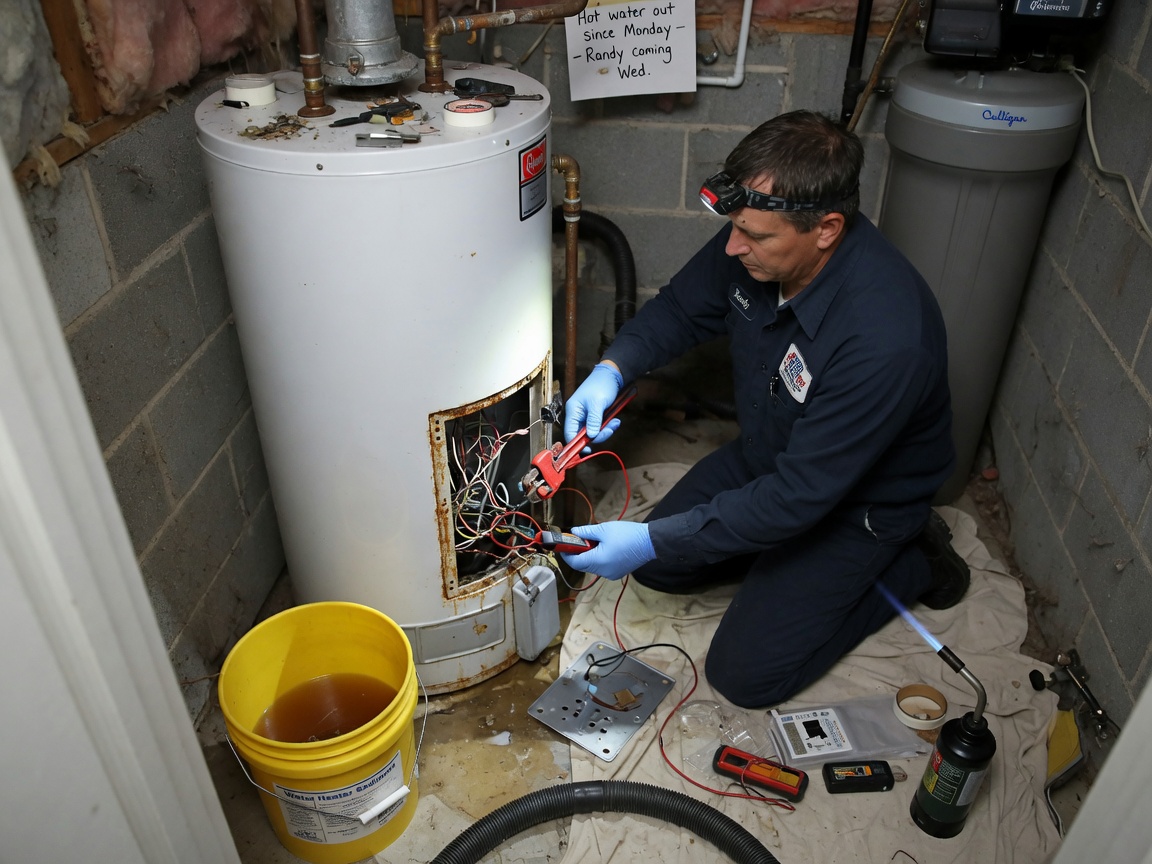
Homeowner in West Cookeville reported sudden loss of hot water after a cold snap. Inspection showed both electric elements failed from scale buildup common in local water. Replaced elements, flushed the tank, and confirmed operation before the next freeze cycle hit.
Water Heater Repair Services We Offer
✓Electric Element Repairs
Replace burned-out upper or lower elements on residential electric tanks common in Algood and East Cookeville homes where hard water accelerates scaling.
✓Gas Control Valve Repairs
Service or replace faulty gas valves and thermocouples on units serving older Downtown Cookeville properties affected by pressure fluctuations from seasonal demand.
✓Thermostat Replacements
Install new thermostats on both gas and electric heaters to restore accurate temperature control in homes near Tennessee Tech with varying water pressure.
✓Anode Rod Inspections
Check and replace magnesium or aluminum rods to slow corrosion in tanks exposed to Putnam County mineral water, especially in West Cookeville basements.
✓Leak Detection and Sealing
Locate and repair leaks at connections or tank seams before they damage floors in older Cane Creek Park area homes with limited crawl space access.
✓Commercial Water Heater Repair
Address high-demand commercial units at businesses near the Cookeville Depot Museum where recovery time and venting differ from residential setups.
Water Heater Repair Cost in Cookeville, TN
| Service | Typical Range | What Affects It |
|---|---|---|
| Electric Element Replacement | $180–$320 | Varies with tank size and whether both elements need work in West Cookeville homes. |
| Gas Valve Service | $250–$450 | Higher when thermocouple and wiring must be replaced on units near Tennessee Tech. |
| Anode Rod Replacement | $150–$280 | Includes rod cost; price rises with difficult access in Downtown Cookeville basements. |
| Thermostat Replacement | $120–$220 | Lower end for electric units; gas models add labor for venting checks. |
Ranges are typical for Cookeville, TN and confirmed with an exact written quote before any work starts.
How it works
- 1
Initial Inspection
Arrive on site in Cookeville or nearby Algood, note unit age, fuel type, and visible corrosion from local water conditions.
- 2
Diagnosis
Test elements, valves, and thermostats while checking for sediment typical after four distinct seasons of temperature swings.
- 3
Repair Or Part Replacement
Replace failed components using parts matched to the existing model and confirm venting meets Putnam County requirements.
- 4
System Test And Flush
Flush the tank, verify operation under load, and review maintenance steps suited to humid subtropical conditions.
- 5
Final Walkthrough
Explain findings and any future risks tied to the home's location or age before leaving.
Pricing
Upfront quotes given after inspection; final price depends on parts needed and access in older homes.