
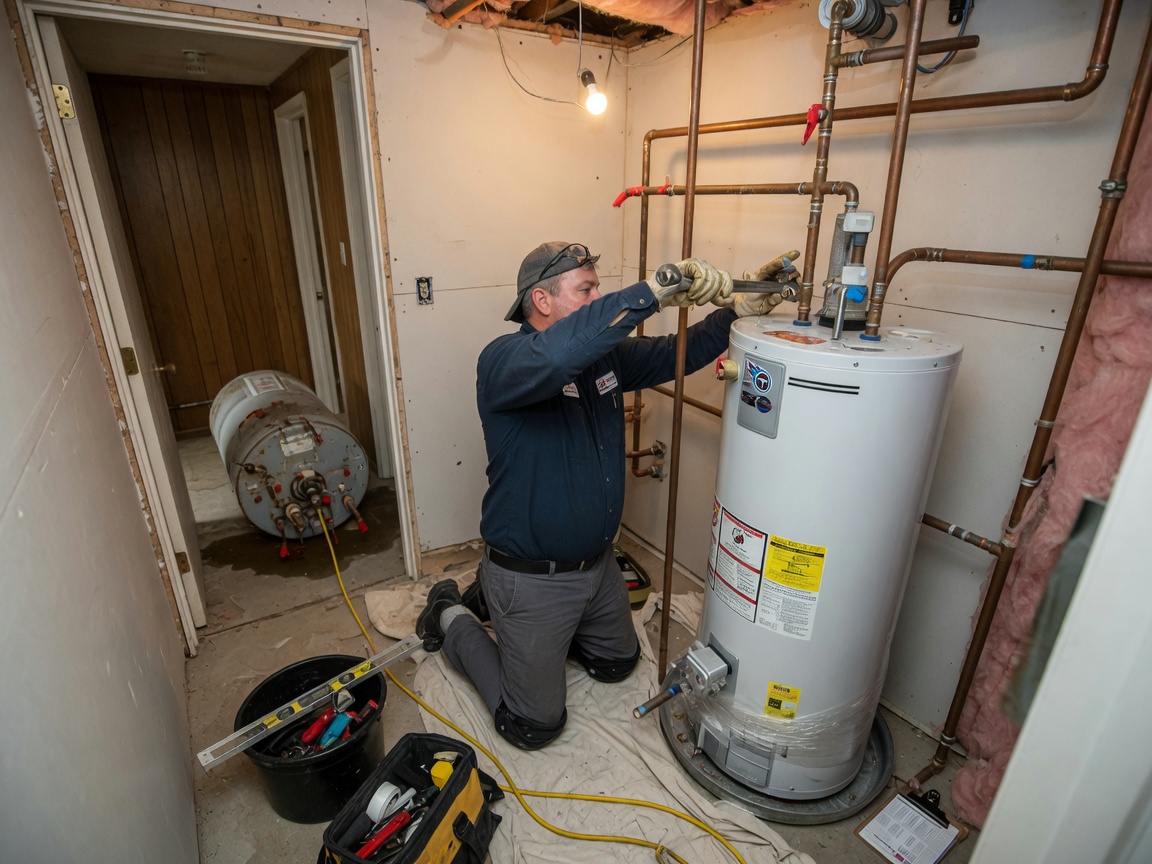
Cookeville homes built before the 1980s in neighborhoods such as East Cookeville and near the Cookeville Depot Museum often have 40- or 50-gallon tanks that no longer meet current household loads. When replacing these units we verify venting clearances, check existing gas line sizing, and confirm the new unit fits the available space without violating Putnam County setback rules. In humid subtropical conditions the added moisture accelerates corrosion on older flue pipes, so we replace them during every installation rather than reusing marginal parts.
Tankless units require dedicated 3/4-inch gas lines and proper combustion air in tightly sealed homes common around Tennessee Tech University. We calculate demand based on simultaneous fixtures rather than square footage because West Cookeville split-level houses frequently add bathrooms without upgrading the original supply. Electric conversions in Algood properties need new 240-volt circuits run from the panel, and we always verify the panel can handle the added load before pulling wire.
Installation timing matters because winter temperatures drop quickly and a failed unit leaves families without hot water during the coldest weeks. We schedule same-day swaps when possible and always test the temperature-pressure relief valve and expansion tank after startup. Crossville and Sparta customers sometimes drive units in from big-box stores with mismatched venting kits; we stock the correct parts locally so the job finishes without return trips.
Technician insight
In Cookeville the thing that catches most people out with Water Heater Installation is the sediment load from our local water supply in homes built before 1990 around the Depot Museum and West Cookeville. Those tanks silt up faster than people expect, so we always flush lines and add dielectric unions during every swap.
West Cookeville Split-Level Swap
A 1978 split-level near Cane Creek Park lost hot water on a January morning. The original 40-gallon gas unit had failed from sediment buildup. We removed the old tank, ran a new 3/4-inch gas line to support a 50-gallon high-recovery model, and installed an expansion tank to match the home's closed system. The family had hot water the same afternoon without permit delays.
Water Heater Installation Services We Offer
✓Tankless Water Heater Installation
Converts homes in Putnam County to on-demand units that save space and reduce standby loss in four-season weather.
✓Electric Water Heater Installation
Replaces or upgrades standard electric tanks with properly sized units matched to older wiring common in East Cookeville homes.
✓Gas Water Heater Installation
Installs natural gas or propane tanks with correct venting and gas line sizing for West Cookeville and Downtown Cookeville residences.
✓Hybrid Heat Pump Water Heater Installation
Adds high-efficiency hybrid units that perform well in the moderate winters around Cane Creek Park and Algood.
✓Water Heater Replacement in Older Homes
Handles full removal and replacement in pre-1980s housing stock while updating venting and addressing sediment from local water.
Water Heater Installation Cost in Cookeville, TN
| Service | Typical Range | What Affects It |
|---|---|---|
| Standard 40-50 Gallon Tank Installation | $850–$1,450 | Includes basic venting and electrical or gas hookups; rises with line extensions or panel upgrades |
| Tankless Unit Installation | $1,800–$3,200 | Higher when dedicated gas line or new venting is required in older homes |
| Hybrid Heat Pump Installation | $1,600–$2,400 | Includes condensate drain routing; price increases with condensate pump needs |
| Old Unit Removal and Haul Away | $125–$225 | Included in most full installations; separate when customer keeps old unit |
Ranges are typical for Cookeville, TN and confirmed with an exact written quote before any work starts.
How it works
- 1
Site Assessment
We measure existing connections, check gas or electric supply capacity, and note any venting or space constraints in the home.
- 2
Unit Selection and Permitting
We recommend the correct capacity and fuel type, then handle any required Putnam County permits before ordering.
- 3
Removal and Rough-In
Old unit is disconnected and removed, lines are flushed, and new venting or electrical runs are prepared.
- 4
Installation and Testing
New water heater is set, connected, filled, and tested for leaks, temperature, and proper operation before final walkthrough.
Pricing
Upfront quotes provided after site visit; final price depends on unit type, venting needs, and any electrical or gas line upgrades.