
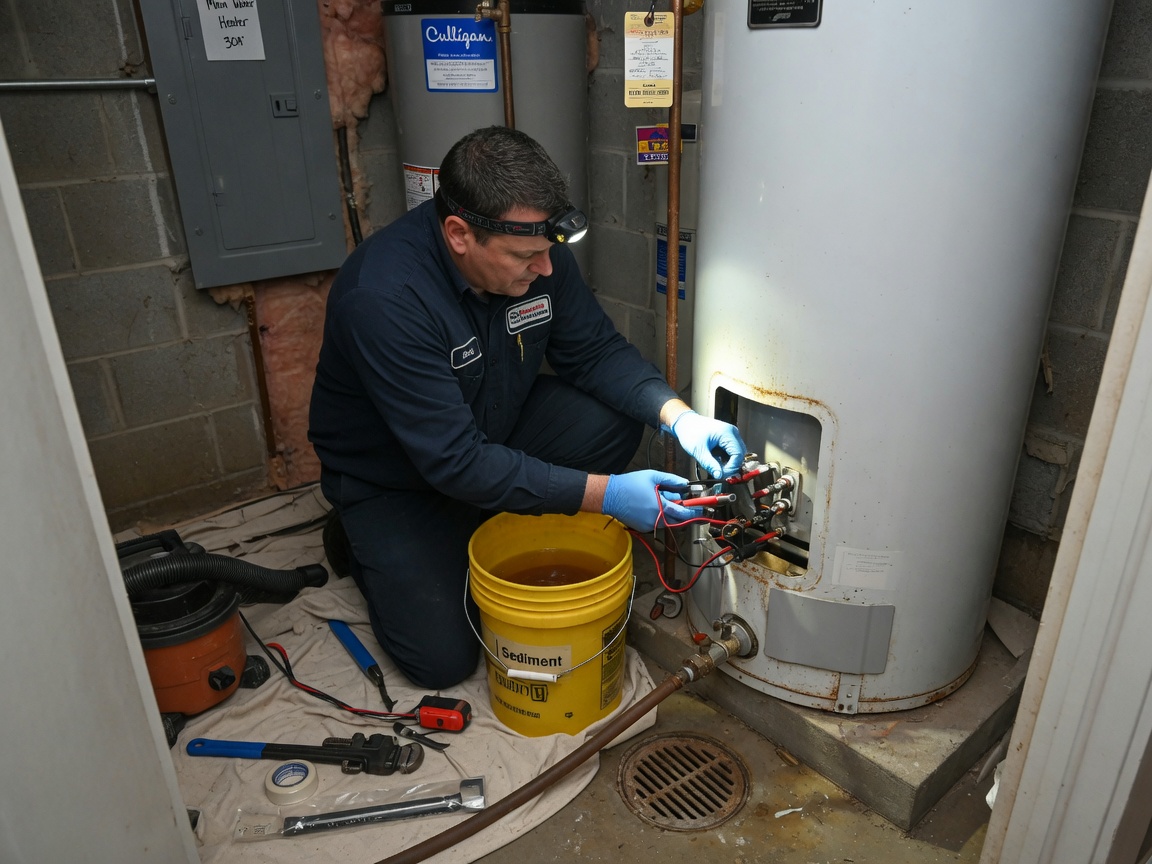
Cookeville homes in older sections of Downtown Cookeville and West Cookeville often have tanks installed decades ago that accumulate sediment faster due to the region's hard water drawn from local sources. Regular flushing removes this buildup before it insulates the heating elements or promotes corrosion, especially important once winter temperatures drop and households increase hot water demand. Technicians also inspect the anode rod, which protects the tank lining, and test the temperature-pressure relief valve to ensure it functions under the pressure changes common in Putnam County.
The humid subtropical climate brings hot summers that can accelerate mineral scaling inside tanks and cold snaps that stress gas lines and thermostats. Maintenance visits in East Cookeville and Algood frequently reveal pilot assemblies that need cleaning after pollen and dust seasons, while homes near Cane Creek Park contend with slightly higher mineral content from nearby terrain. Addressing these issues during service keeps units running efficiently without the need for emergency calls when temperatures swing.
Proper maintenance also involves checking expansion tanks and verifying venting on gas models, two steps that matter in two-story homes common around Tennessee Tech University. Skipping these checks can lead to leaks or inefficient operation once the four seasons cycle through again. Service is available Mon–Sat 7am–10pm and Sun 8am–9pm so residents in nearby Sparta or Lebanon can schedule around work and family routines.
Technician insight
In Cookeville, the thing that catches most people out with Water Heater Maintenance is how quickly sediment builds in tanks serving homes built before the 1990s in Downtown Cookeville and West Cookeville; the cold winters here make that layer insulate the bottom faster than homeowners expect, turning a simple flush into a longer job once scale hardens.
East Cookeville Home With Inconsistent Hot Water
A homeowner in East Cookeville noticed temperature swings after the first cold snap. Inspection showed heavy sediment and a depleted anode rod in a 22-year-old tank. The technician flushed the tank, replaced the anode, and recalibrated the thermostats. Hot water stabilized and the unit ran quietly through the rest of the season.
Water Heater Maintenance Services We Offer
✓Sediment Flushing Service
Drains and flushes tanks to remove mineral buildup common in Putnam County water, restoring efficiency and extending tank life.
✓Anode Rod Inspection and Replacement
Checks the sacrificial rod and replaces it when depleted to prevent tank corrosion in older Cookeville housing stock.
✓Temperature Pressure Relief Valve Testing
Tests and replaces the TPR valve to maintain safe pressure release during seasonal temperature swings across Algood and West Cookeville.
✓Thermostat Calibration
Adjusts upper and lower thermostats for accurate temperature control and reduced energy use in homes near Tennessee Tech University.
✓Pilot Assembly Cleaning
Cleans gas pilot components to prevent outages caused by dust and pollen that accumulate during Cookeville summers.
✓Expansion Tank Check
Inspects and charges expansion tanks to protect plumbing from pressure spikes in two-story homes throughout Downtown Cookeville.
Water Heater Maintenance Cost in Cookeville, TN
| Service | Typical Range | What Affects It |
|---|---|---|
| Sediment Flushing | $125–$225 | Higher for 80+ gallon tanks or heavy buildup common in older Downtown Cookeville homes |
| Anode Rod Replacement | $150–$275 | Includes rod cost; varies by accessibility in tight utility closets |
| TPR Valve Replacement | $175–$300 | Includes new valve and testing; price rises if venting must be adjusted |
| Full Maintenance Package | $275–$450 | Covers flushing, anode check, valve test, and thermostat calibration |
Ranges are typical for Cookeville, TN and confirmed with an exact written quote before any work starts.
How it works
- 1
Initial Assessment
Technician arrives and reviews the water heater model, age, and any recent issues while noting location factors such as proximity to Cane Creek Park or older neighborhoods.
- 2
System Shutoff And Drainage
Water and power or gas are isolated, then the tank is partially drained to access sediment layers without disturbing nearby fixtures.
- 3
Component Inspection And Service
Anode rod, TPR valve, thermostats, and pilot are examined and serviced according to findings before the tank is refilled and tested.
- 4
Final Verification
Unit is restored to operation, temperature is confirmed, and the homeowner receives a summary of work performed and any recommended follow-up.
Pricing
Upfront quotes given on site after inspection; final price depends on tank size, condition, and any parts needed.